+91 84849 90676
.cd78382e.png) info@artigenius.com
info@artigenius.com



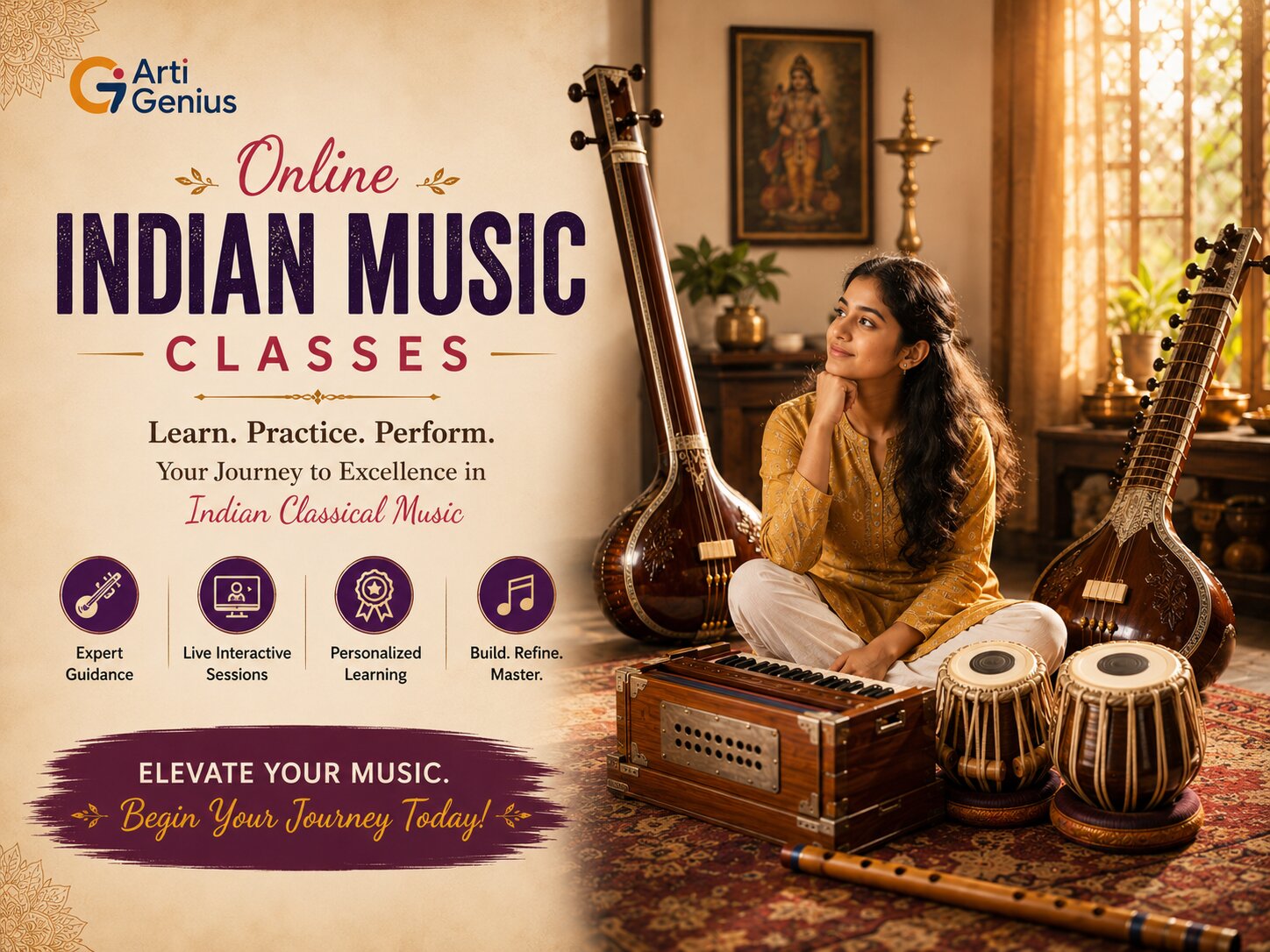
Indian music has a completely different feeling compared to most modern commercial music.
It feels deeper, more emotional, and strongly connected to culture and storytelling. A huge reason for that comes from traditional Indian musical instruments. Each instrument has its own personality, sound, and emotional impact.
Some instruments create calm and peaceful melodies, while others bring powerful rhythm and energy to performances.
Even today, these instruments remain an important part of classical music, devotional music, folk traditions, film music, and live performances across India.
For students learning through online music classes, understanding traditional instruments helps build a stronger connection with Indian music itself. It also improves listening skills because every instrument teaches rhythm, melody, and expression differently.
Here are some of the most important traditional Indian musical instruments every music lover should know about.
1. Sitar
The sitar is probably one of the most internationally recognized Indian instruments.
Known for its deep and meditative sound, the sitar is widely used in Hindustani classical music.
It has:
- Long strings
- Curved frets
- Resonating sympathetic strings
The sound feels rich and emotional, especially during slow ragas.
Legendary musicians like Pandit Ravi Shankar helped introduce the sitar to global audiences, making it one of India’s most respected instruments worldwide.
2. Tabla
The tabla is one of the most important percussion instruments in Indian music.
It consists of two drums played together:
- Dayan (smaller drum)
- Bayan (larger bass drum)
What makes tabla unique is the level of finger control required.
Tabla players create complex rhythmic patterns using hand techniques instead of drumsticks.
Students attending online Hindustani music classes often learn tala and rhythm structures alongside tabla patterns because rhythm is central to Indian classical music.
3. Harmonium
The harmonium is extremely popular in Indian classical, devotional, and semi-classical music.
It is a keyboard-based instrument played using one hand while the other controls air through bellows.
Many beginners start learning music through harmonium because it helps:
- Understand swaras clearly
- Improve pitch accuracy
- Support vocal practice
Students taking online harmonium classes often use the instrument to practise ragas, alankars, and singing exercises more effectively.
The harmonium also became popular because it is portable and relatively easier to learn compared to some classical instruments.
4. Veena
The veena is one of the oldest classical instruments in India and is strongly associated with Carnatic music.
It produces a calm, smooth, and deeply traditional sound.
The instrument requires precise finger movement and strong posture control.
Learning veena takes patience because it focuses heavily on:
- Raga expression
- Finger precision
- Melody control
In South Indian classical music, the veena holds huge cultural and spiritual importance.
5. Bansuri (Flute)
The bansuri is a simple bamboo flute, but its sound can be incredibly emotional and powerful.
Unlike metal flutes used in Western music, the bansuri creates a softer and more natural tone.
It is widely used in:
- Hindustani classical music
- Devotional music
- Film songs
- Folk traditions
Many beginners underestimate how difficult flute control actually is. Breath control plays a huge role in producing smooth notes and transitions.
6. Sarod
The sarod is known for its deep and serious sound.
Unlike the sitar, it has a fretless surface, which allows musicians to create smooth note slides and emotional transitions.
Sarod performances often feel intense and meditative.
Because of its complexity, learning sarod requires:
- Strong listening skills
- Finger precision
- Patience with raga development
It remains one of the most respected instruments in Hindustani classical music.
7. Mridangam
The mridangam is one of the main percussion instruments used in Carnatic music.
It is played using both hands and produces multiple rhythmic tones.
The instrument is known for:
- Speed
- Rhythmic complexity
- Precision
In South Indian classical performances, the mridangam plays a major role in maintaining tala and supporting live improvisation.
8. Santoor
The santoor creates one of the most peaceful sounds in Indian music.
It consists of multiple strings played using small wooden mallets.
Originally associated with Kashmir, the santoor later became popular in Indian classical music as well.
The sound feels light, flowing, and highly melodic.
Many listeners find santoor music calming because of its gentle tonal quality.
9. Shehnai
The shehnai is strongly connected with Indian weddings, ceremonies, and spiritual events.
Its sound feels festive yet emotional at the same time.
The instrument gained international recognition through legendary musician Ustad Bismillah Khan.
Playing the shehnai requires excellent breath control and precision because the instrument responds very sensitively to airflow.
10. Tanpura
The tanpura may look simple, but it is one of the most important instruments in Indian classical music.
Unlike melodic instruments, the tanpura provides a continuous background drone that supports singers and instrumentalists.
This helps musicians stay connected to:
- Shruti (pitch)
- Tonal balance
- Raga atmosphere
Students learning through online music classes often practise with digital tanpura tools because maintaining pitch accuracy is essential in Indian classical music.
Why Traditional Instruments Still Matter Today
Even with modern music production and digital instruments, traditional Indian instruments continue to remain relevant.
Why?
Because they carry emotional depth and cultural identity that electronic sounds often cannot fully replace.
These instruments also train musicians differently.
They improve:
- Listening ability
- Rhythm understanding
- Musical patience
- Emotional expression
Learning about traditional instruments also helps students appreciate Indian music on a much deeper level.
Which Instrument Is Best for Beginners?
This depends on personality and interest.
For example:
- Harmonium works well for beginners learning swaras
- Tabla is great for rhythm-focused learners
- Flute suits students who enjoy breath-based instruments
- Veena and sitar require more patience and long-term dedication
The important thing is choosing an instrument that genuinely interests you.
Motivation matters more than difficulty in the beginning.
Can You Learn Traditional Instruments Online?
Yes, definitely.
Today, students can learn instruments through structured online lessons from home.
Many modern online music classes combine live instruction, recorded sessions, digital tools, and guided practice routines.
Students who want to explore Indian classical music and instruments can explore ArtiGenius, which offers flexible online classes and expert guidance.
Online learning also makes classical music more accessible for students who may not have local teachers nearby.
Conclusion
Traditional Indian musical instruments are not just tools for making music.
They represent history, emotion, storytelling, and culture.
From the peaceful sound of the bansuri to the rhythmic power of the tabla, every instrument brings something unique to Indian music.
For students learning through online music classes, understanding these instruments creates a stronger connection with melody, rhythm, and classical traditions.
Even if you do not plan to become a professional musician, exploring these instruments can completely change the way you listen to and appreciate music.