+91 84849 90676
.cd78382e.png) info@artigenius.com
info@artigenius.com



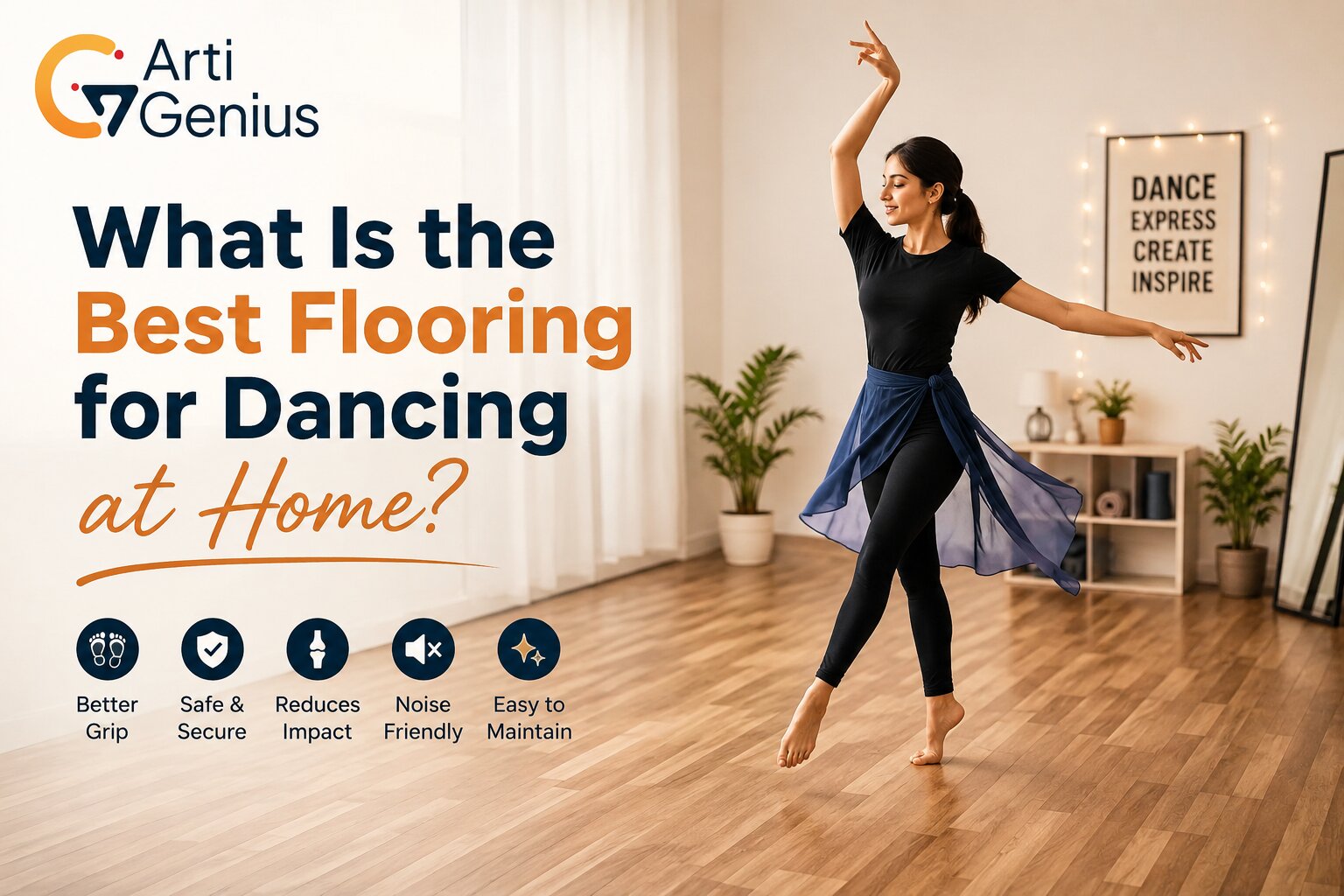
The safest home dance floor is a roll-out Marley dance mat installed over a sprung or cushioned subfloor. Hardwood floors are a solid second choice when paired with supportive dance shoes. You should never dance repeatedly on bare concrete, tile, or unpadded surfaces, as the harsh impact leads to shin splints, tendonitis, and joint strain over time.
When you're taking online dance classes in a living room, bedroom, or home studio, the surface beneath your feet matters just as much as your technique.
Dancing on unforgiving surfaces transfers high-impact shock straight up into your ankles, knees, and lower back. Choosing the right surface keeps you dancing safely for years without injury.
Ranking Home Dance Surfaces (From Safest to Most Dangerous)
1. Sprung Wood Floor with a Marley Mat:
The absolute gold standard for shock absorption and controlled traction.
2. Portable Marley Mat over Plywood or Foam Underlayment:
A fantastic DIY option that absorbs impact and protects your joints in temporary spaces.
3. Traditional Hardwood Floor:
Good for many styles when paired with supportive footwear, though slightly harder on joints than sprung floors.
4. Interlocking EVA Foam Tiles:
Excellent for high-impact fitness dance or hip-hop, but often too sticky for turns and spins.
5. Bare Concrete, Ceramic Tile, or Thin Carpet:
The most dangerous surfaces. They offer zero shock absorption and significantly increase your risk of joint pain or sudden twists.
Breakdown of Popular Home Dance Surfaces
Roll-Out Marley Vinyl Mats
Marley mats provide exceptional slip resistance and just the right amount of traction for ballet, contemporary, jazz, and barefoot styles. In India, portable practice Marley mats typically cost between ₹7,000 and ₹25,000, depending on size and thickness. Keep in mind that they still require a slightly forgiving subfloor or rubber underlayment beneath them to cushion big jumps.
Interlocking EVA Foam Tiles
Ranging from ₹2,000 to ₹6,000 for a standard room setup (approx. ₹50 to ₹150 per sq. ft.), foam tiles offer high shock absorption. They are great for cardio dance, Bollywood fitness routines, and hip-hop. However, because EVA foam has high surface friction, it is too sticky for safe spins, turns, or ballet pivots.
Hardwood / Engineered Wood Flooring
Hardwood offers classic beauty and great sound for tap, classical dance, jazz, and salsa. While its natural flex is much better than Indian marble or vitrified tiles, dancing on hardwood without supportive shoes can still cause joint fatigue over long practice sessions.
Crucial Safety Rule: The Pivot Test
If you're dancing on carpet or smooth tile, avoid executing sharp pivots or spins in high-traction sneakers. If your shoe gets stuck while your body rotates, you risk severe knee injuries like torn meniscus or ACL.
To stay safe, slide Dance Socks over your sneakers when practicing on carpet, or invest in a portable wooden turn board to practice spins safely without gripping tile or carpet.
Pro Tip for Indian Homes: Most Indian homes feature marble or vitrified tile flooring. If you cannot install wood, never dance directly on tile. Layer dense 10mm–20mm EVA foam tiles as a base layer, and roll a Marley vinyl sheet over it to create a quick, budget-friendly DIY sprung floor!