+91 84849 90676
.cd78382e.png&w=48&q=75) info@artigenius.com
info@artigenius.com



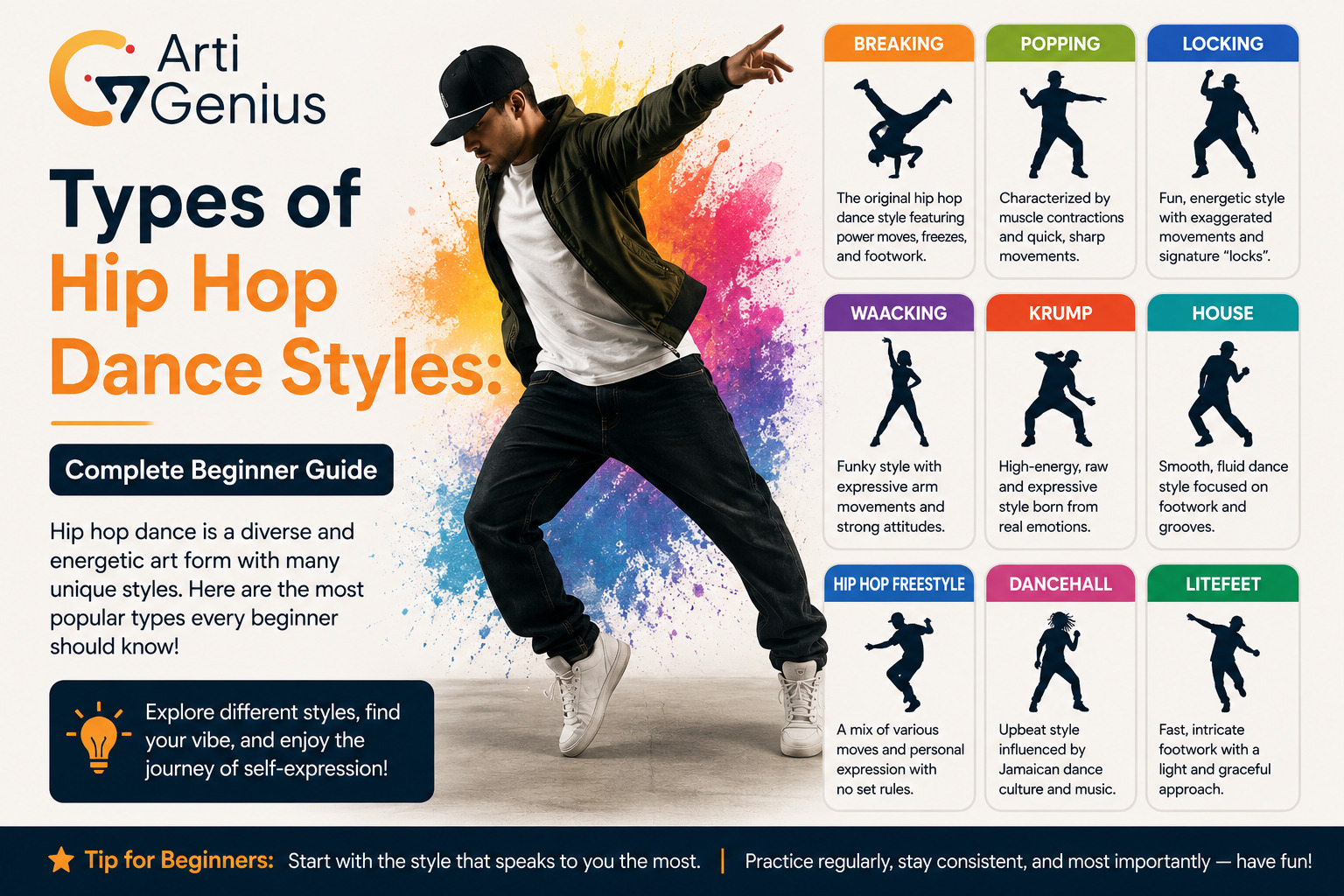
Hip hop dance is one of the most energetic and expressive dance forms in the world. Originating from street culture, hip hop combines rhythm, creativity, musicality, and personal expression.
Unlike many traditional dance forms, hip hop continues to evolve with new movements and styles. From powerful popping techniques to freestyle battles, each hip hop dance style has its own identity and movement language.
Whether you are a beginner exploring dance for the first time or someone looking to improve your skills through online hip hop dance classes, understanding different hip hop styles is the first step.
What Is Hip Hop Dance?
Hip hop dance is a style of street dance that developed alongside hip hop music and culture. It focuses on:
- Rhythm and musical timing
- Body control
- Freestyle movement
- Creativity
- Individual expression
Today, hip hop dance is performed globally in competitions, music videos, stage shows, and dance studios.
Popular Types of Hip Hop Dance Styles
1. Breaking (Breakdance)
Breaking is one of the original elements of hip hop culture.
It includes:
- Toprock (standing movements)
- Downrock (floor movements)
- Power moves
- Freezes
Popular breaking moves include:
- Headspins
- Windmills
- Backspins
Breaking requires strength, balance, and body coordination.
2. Popping
Popping is a hip hop style based on quickly contracting and relaxing muscles to create a “pop” effect.
Characteristics:
- Sharp movements
- Robot-like effects
- Controlled body isolation
Common popping techniques include:
- Hits
- Waving
- Animation
- Tutting
This style focuses heavily on precision and body control.
3. Locking
Locking is a fun and energetic dance style known for sudden pauses and exaggerated movements.
Key features:
- Fast movements
- Freezes or “locks”
- Expressive gestures
Locking often includes playful expressions and interaction with the audience.
4. Hip Hop Freestyle
Freestyle is one of the most creative forms of hip hop dance.
It allows dancers to:
- Create their own movements
- Express emotions
- Experiment with music
Freestyle helps dancers develop confidence and individuality.
5. House Dance
House dance developed in clubs and focuses on fast footwork and smooth movements.
Main elements:
- Footwork patterns
- Flowing body movements
- Groove-based steps
House dance combines energy, rhythm, and improvisation.
6. Krumping
Krumping is an intense and expressive hip hop style.
It uses:
- Strong movements
- Chest pops
- Arm swings
- Emotional expression
This style allows dancers to release energy and express powerful emotions.
7. Waacking
Waacking is a style known for dramatic arm movements and expressive performance.
Features include:
- Fast arm rotations
- Posing
- Musical expression
It combines rhythm, personality, and performance skills.
8. Dancehall
Dancehall originated from Jamaican street culture and has influenced modern hip hop choreography.
It focuses on:
- Hip movements
- Rhythm
- Energetic combinations
Many commercial hip hop routines include dancehall-inspired movements.
9. Commercial Hip Hop
Commercial hip hop is commonly seen in:
- Music videos
- Concert performances
- Movies
It combines different hip hop techniques with choreography designed for entertainment.
This style focuses on:
- Performance quality
- Stage presence
- Group synchronization
10. Urban Choreography
Urban choreography combines multiple street dance styles.
It may include:
- Hip hop
- Popping
- Locking
- Contemporary influences
This style is popular in dance studios and competitions.
Benefits of Learning Hip Hop Dance
Learning hip hop dance helps improve:
Physical Fitness
Hip hop improves:
- Strength
- Flexibility
- Coordination
- Stamina
Confidence and Expression
Dance helps you express yourself through movement and improves stage confidence.
Creativity
Freestyle and choreography encourage dancers to develop their own style.
Which Hip Hop Dance Style Should Beginners Learn First?
Beginners can start with:
- Basic hip hop grooves
- Simple choreography
- Freestyle exercises
- Body isolation techniques
After building fundamentals, dancers can explore styles like popping, breaking, locking, or krumping.
How Long Does It Take to Learn Hip Hop Dance?
Learning time depends on:
- Practice consistency
- Training method
- Dance experience
- Understanding of rhythm
With regular practice and proper guidance, beginners can build strong foundations within a few months.
Can You Learn Hip Hop Dance Online?
Yes, beginners can learn hip hop dance through structured online hip hop dance classes.
Online learning helps students:
- Practice at their own pace
- Learn basic steps
- Improve choreography skills
- Train with experienced instructors
FAQ: Types of Hip Hop Dance Styles
What are the main types of hip hop dance styles?
The main hip hop dance styles include breaking, popping, locking, freestyle, house dance, krumping, waacking, dancehall, and commercial hip hop.
Which hip hop dance style is easiest for beginners?
Basic hip hop choreography and freestyle foundations are usually easier for beginners before moving into advanced styles.
Is hip hop dance difficult to learn?
Hip hop dance becomes easier with consistent practice, rhythm training, and proper guidance.
What skills are needed for hip hop dance?
Important skills include musicality, coordination, body control, confidence, and creativity.
Start Your Hip Hop Dance Journey
Hip hop dance is more than just learning steps — it is about rhythm, creativity, and expressing your personality through movement.
Understanding the different types of hip hop dance styles helps beginners choose the right direction and explore the style that matches their interests. Whether you are interested in breaking, popping, locking, freestyle, or commercial hip hop, each style offers a unique way to develop your skills and confidence.
With regular practice and expert guidance through online dance classes, anyone can learn hip hop dance from the comfort of their home and develop their own unique style. Online hip hop dance classes provide structured training, professional guidance, and flexible learning options for beginners and advanced dancers.